In 2026, in the age of information overload, your knowledge is the most valuable currency you own. Whether you're a spreadsheet wizard, an artisan bread baker, or a Python developer — there are people out there who will gladly pay you to shortcut their learning curve by weeks or months. Creating online courses is no longer reserved for big training companies. With the tools available today, anyone can build a digital product that generates passive income for years. That said, let's be honest: this is a real business project. It requires careful planning, solid production, and — above all — effective marketing. No magic, just a proven process.
The e-learning market is in a golden era globally. People aren't buying courses just to collect certificates anymore — they want practical skills that help them earn more or live better. If you treat this seriously, your first course can be the start of a whole new income stream. Instead of trading time for money hour by hour, you create once and potentially earn from thousands of copies. In this article, we'll walk you through the entire journey — from a fuzzy idea, through recording in your home setup, all the way to building a sales funnel that brings in customers on autopilot. Because a well-built online course works even when you don't.
Course creation is a natural next step for people already working in areas like freelance copywriting, blogging, or YouTube. It's how you scale your earnings beyond the limits of billable hours.
Finding Your Niche: How to Pick a Topic the Market Will Pay For
The biggest mistake beginners make is building a course around what they assume people want. They spend three months recording, hit publish — and hear nothing but silence. To avoid that trap, you need to validate your idea before you invest serious time. Your topic should sit at the intersection of three zones: what you're genuinely skilled at (Expertise), what you actually enjoy (Passion), and what people are actively willing to pay for (Market demand).
How do you check real demand? Browse Google's Keyword Planner, look at YouTube search trends, and spend time on Udemy. If you find a course in your area with 10,000+ enrolled students — that's a green light. It means the market exists. Your job isn't to be first; it's to be better or more specific in a way that makes you stand out. A narrower angle often wins: "Excel for freelance bookkeepers" beats "Excel for everyone" every time.
ℹ️ Three Hot Markets Right Now (2026)
- Finance & Wellness: "Get out of debt in 12 months", "Investing in ETFs for beginners", "Gut-health nutrition".
- Technology & AI: "Automate your workflow with ChatGPT", "No-code app building", "Video editing in CapCut".
- Relationships & Hobbies: "Talking to teenagers without arguments", "Dog training fundamentals", "Furniture restoration".
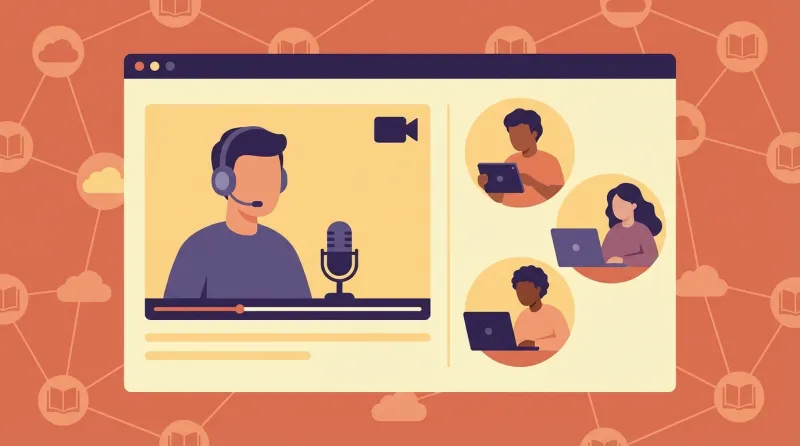
Course Production: Do You Need a Recording Studio? (Gear Guide 2026)
Short answer: no. People buy courses for the transformation, not for 8K video quality. That said, your production does need to clear a basic bar of professionalism. The good news is that bar is lower than most people think. A modern smartphone with a decent camera and a solid USB microphone is all you need to get started. The two things that matter most for perceived quality are lighting and audio clarity — not your camera.
💡 The "Audio Is King" Rule
Viewers will forgive slightly grainy footage, but they won't forgive distracting background noise or hollow echo. Get a USB microphone and hang some soft furnishings around the room to absorb reflections. Your voice should sound warm and clear — like a good podcast. That audio quality signals authority from the very first second. Great tools to start: Blue Yeti or Rode NT-USB for mics, Loom for screen recording, Descript for editing, and Canva for professional slide design.

Platform Showdown: Where Should You Sell Your Course?
This is one of the most important strategic decisions you'll make. Udemy is like Amazon for courses. They bring the traffic and handle payments, but they take a significant cut — anywhere from 37% to 63% depending on whether the sale came through your own affiliate link or their promotions — and their constant discount campaigns drive prices into the ground. It's a decent place to validate an idea and reach a broad audience with zero ad spend.
Your own platform gives you full control. You set the price (think $197–$997 or higher), you own the customer email list, and you keep the relationship with your buyers. Platforms like Teachable ($39–$499/mo), Thinkific (free–$499/mo), Kajabi ($149–$399/mo), and Podia ($39–$89/mo) are purpose-built for this. My honest take? If you don't have an audience yet, start on Udemy or Skillshare to get traction and real student feedback. If you already have followers on YouTube, a newsletter, or a podcast — launch on your own platform, because that's where the real money and long-term relationships live.
| Factor | Udemy / Skillshare / Coursera | Own Platform (Teachable / Kajabi / Gumroad) |
|---|---|---|
| Platform cut | 37%–63% (Udemy) or royalty pool (Skillshare) | 0%–10% (payment processing only) |
| Price control | Low — frequent flash sales forced by platform | Full — you set and protect your own pricing |
| Traffic | Platform brings buyers to you | You drive all your own traffic |
| Email list | No access — platform owns the customer | 100% yours — your most valuable asset |
| Entry barrier | Very low — just upload and publish | Medium — setup and marketing required |
Building a Sales Funnel: How to Sell Without Being Pushy
Nobody buys a $497 course from a cold Facebook post. You need a funnel. A funnel is the process of educating potential students and establishing your credibility before you make an offer. The goal is for your prospect to naturally arrive at the conclusion that your knowledge will solve their problem — without you having to pitch hard. The most effective funnels in 2026 are built on delivering genuine free value before asking for money.
- Traffic: Instagram Reels, YouTube videos, or a podcast — give away genuinely useful knowledge for free.
- Lead Magnet: Offer something extra (a checklist, a mini-course, a free chapter) in exchange for an email address. Tools like ConvertKit, MailerLite, or Beehiiv make this straightforward.
- Email Sequence: Send a series of emails showing real student results, behind-the-scenes stories, and addressing common objections.
- Launch Window: Open enrollment for a limited window — 5 to 7 days — with a clear deadline. Urgency, done honestly, is one of the most powerful conversion drivers you have. Consider running a live webinar on day one of your launch.
For course pricing, think in tiers: self-paced courses typically sell for $97–$497, while cohort-based programs with live calls and community access can command $497–$2,997 for a four-to-eight week experience. Premium signature programs regularly exceed $1,997. Don't undercharge — a low price signals low value, and it also means you need far more customers to hit the same revenue target.
💰 What Can You Realistically Earn?
Small scale (starting out): 200 people on your email list → 6 sales at $297 = $1,782. Established scale: 10,000 subscribers → 300 sales at $997 = ~$299,100 from a single launch. Creators like Pat Flynn and Ali Abdaal have publicly documented seven-figure course businesses. The economics work because the marginal cost of delivering course number 1,000 is essentially zero — your margin only gets better as you grow.
Tax and Legal Basics for US and UK Course Creators
Selling online courses is a commercial activity, and the legal side is something you want to set up correctly from day one. Getting your foundations right early saves you serious headaches later — and protects your students' trust.
⚠️ Tax and Compliance — Don't Skip This
US creators: Platforms will issue a 1099-K once you cross $5,000 in sales (2024 threshold). You'll report income on Schedule C and pay self-employment tax. Digital product sales tax varies by state — some states tax digital goods, others don't. Consult a CPA familiar with digital businesses. UK creators: Register for Self Assessment with HMRC. If your turnover exceeds £90,000, you must register for VAT. If you're selling to EU customers, look into the OSS (One Stop Shop) scheme for VAT compliance. Wherever you are, your sales page needs a clear refund policy and privacy policy that covers how you handle customer data under GDPR or US state privacy laws.
What about intellectual property? Your course is your creative work, and it belongs to you. Host your video content on platforms that prevent easy downloading — Vimeo Pro, Wistia, or your chosen course platform's native player. But here's the thing: the best protection against piracy is excellent ongoing student support and regular content updates that a pirated copy simply can't replicate. Make your paid community worth staying in.
Learning Psychology: How to Get Students to Actually Finish Your Course
Industry data consistently shows that only 5–15% of people complete online courses they've purchased. If your students don't finish, they don't get results. If they don't get results, they won't leave positive reviews, and they won't refer friends. Your job is to design the experience so that finishing feels achievable — and rewarding. That means thinking like a game designer, not just a subject expert.
- Bite-sized lessons: Break content into 5–10 minute videos. Students can chip away at the course during a lunch break, making progress feel constant and sustainable.
- Action items after every lesson: Give a single, specific task to complete before moving on. Knowledge without application evaporates within days — practice is what makes it stick.
- Community access: A private Circle or Mighty Networks group where students can ask questions and share wins dramatically increases engagement and course completion rates. It also becomes a major selling point for your next launch.
When students post their wins — a skill they applied, a result they achieved — ask if you can share it. That social proof becomes fuel for your next sales funnel. Real student stories are worth ten times more than any testimonial you write yourself. Build the feedback loop into your course design from the start, and your second course launch will almost always outperform the first.
📋 Online Course Business — 10 Key Lessons
- Start with the problem: Build a course that solves a specific, painful challenge your audience already knows they have.
- Validate before you build: Confirm people will pay — ideally by pre-selling — before spending weeks recording.
- Audio beats video: Your microphone is the single most important piece of equipment in your home studio.
- Build your email list: It's your most durable marketing asset — no algorithm can take it from you.
- Deliver real outcomes: Design for transformation, not just consumption. Watching isn't learning.
- Price reflects value: Don't undercharge. A $297 course signals more credibility than a $29 one.
- Be genuinely transparent: Share your journey, including the failures — that's what builds real trust.
- Repurpose your course content: Free clips, excerpts, and case studies from your course are some of your best marketing.
- Sort out your legal basics: Privacy policy, refund terms, and tax registration are non-negotiable from day one.
- Never stop improving: Your version 2.0 will be dramatically better than version 1.0 — ship the first one anyway.
Creating and selling online courses is one of the most rewarding ways to earn income online. You're not just building financial freedom — you're genuinely helping people change their lives. This is a business that grows alongside your own expertise. Stop being only a student. The e-learning market is waiting for your unique perspective and hard-won experience. Go build it.
Comments (0)
No comments yet. Be the first!
Add a comment