In 2026, when AI tools are flooding the internet with mass-produced content, an authentic personal or niche blog has become more valuable than ever before. People are tired of soulless Wikipedia-style articles — they want opinions, real-world experience, and a face they can trust. Blogging stopped being just an online diary a long time ago; today it's a powerful business platform and the hub of your entire digital operation. If you think "blogs are dead," you're probably still looking at them through the lens of 2010. Modern blogging means advanced SEO, conversion funnels, and building an audience that buys what you recommend. In this guide, I'll show you how to create a blog that doesn't just "look nice" — it generates real money from the very first weeks you're live.
Most people quit blogging after a month because "nobody reads it." That's the wrong approach. In 2026 you don't wait for readers to stumble across you — you target them precisely through Google and social media. You don't need a million monthly page views to build a meaningful income. A few thousand genuinely engaged readers in the right niche (specialist finance, B2B software, health and wellness, or home improvement) can be more than enough. We'll walk through the whole process together: choosing the right technology stack, building a content strategy that survives Google's AI-powered search updates (Google SGE), and 7 proven monetization methods that could let you quit your day job faster than you expect.
A blog is the foundation you can use to layer on other income streams, such as affiliate marketing, selling online courses, or establishing yourself as a virtual assistant or consultant.
Technical Foundations: WordPress or a SaaS Platform?
This decision will shape your earnings for years. In 2026 you have two main paths. Self-hosted WordPress.org is the only right choice if you're treating your blog as a business. It gives you full ownership of your content and unlimited monetization options. You can install any plugin you need, connect complex ad networks, and build your own storefront.
SaaS platforms like Wix or Squarespace look polished and are easy to get started on, but they'll hold you back in the long run — both in terms of SEO ceiling and scaling costs. If you want to earn money, you need "your own piece of the internet" that nobody can switch off by updating their terms of service. A self-hosted WordPress blog is an asset you own; a blog on a free hosted platform is a room you're renting.
ℹ️ Your Starter Pack
- Domain: Your brand name (e.g., YourNameHere.com or NicheKeyword.com). Cost: ~$10–15/year via Namecheap, GoDaddy, or Cloudflare Registrar.
- Hosting: A fast server with PHP 8.3+ and NVMe storage. Solid options: Hostinger ($1.99–4.99/mo), Bluehost ($2.95–13.95/mo), SiteGround ($3.99–7.99/mo). Once you're scaling, consider WP Engine ($25–95/mo) for managed performance.
- Theme: Lightweight and fast — Astra Pro, GeneratePress Premium, or Kadence. If you want a visual builder, Elementor Pro ($59–399/yr) or Divi are popular picks. Page speed is a critical Google ranking factor in 2026.
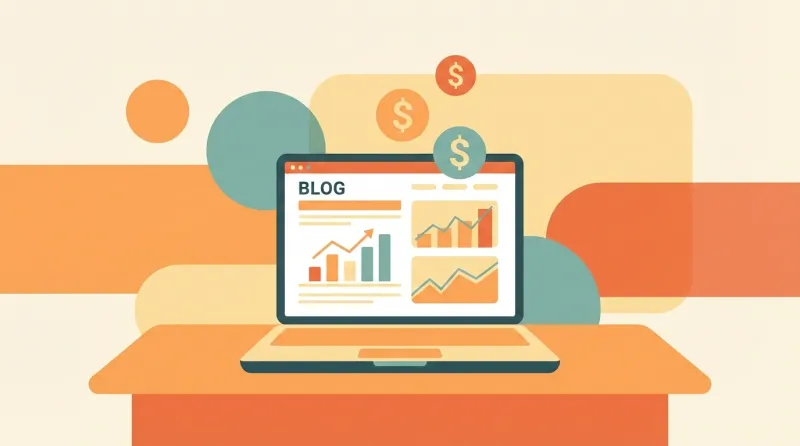
Choosing Your Niche: Where the Real Money Is
Writing "about everything and nothing" is the fastest route to failure. In 2026 you need to be "a mile deep and an inch wide". The narrower your niche, the easier it is to become the recognized authority (Google's E-E-A-T) and the more advertisers are willing to pay to reach your audience.
The most profitable niches are those where people have serious problems to solve or serious money to spend. Personal finance and credit cards, B2B tech/SaaS, specialist health, legal advice, luxury hobbies, and home improvement — these are gold mines. Steer clear of niches that are too broad ("lifestyle," "general recipes") unless you have a genuinely fresh angle that will cut through the noise.
| Niche Category | SEO Difficulty | Ad Rates (RPM/CPM) | Primary Income Source |
|---|---|---|---|
| Personal Finance / Investing | Very High | Very High ($15–50+ RPM) | Affiliate (credit cards, brokers) / Own products |
| Tech / AI / SaaS Reviews | High | High ($8–25 RPM) | Sponsored posts / Affiliate |
| Health / Specialist Wellness | High (YMYL) | Medium ($5–15 RPM) | E-books / Courses / Consulting |
| Home / DIY / Food (Recipes) | Medium | Medium ($8–20 RPM Mediavine) | Display ads (Mediavine/Raptive) / Shop |
| Travel / Lifestyle | Medium | Low–Medium ($3–10 RPM) | Brand partnerships / Affiliate |
7 Blog Monetization Methods That Actually Work
Most beginners think only about AdSense. That's a mistake. Display ads are the least lucrative method for a small blog. The real money is somewhere else entirely. Here are 7 income streams you should combine to maximize your earnings.
- Affiliate Marketing: You recommend other companies' products. When someone buys through your link, you earn a commission. This is the best model to start with, because it requires nothing except reader trust. Networks like Amazon Associates (1–10%), ShareASale, Impact, CJ Affiliate, and Awin (especially strong in the UK) all have thousands of programs to choose from.
- Sponsored Posts: Brands pay you to publish an article featuring their product or service. For a mid-sized blog with 10,000–20,000 monthly sessions, rates typically range from $200 to $2,000+ per post — and that ceiling rises sharply as your domain authority grows.
- Digital Products (E-books, Courses, Templates): You sell your own knowledge. Margins are close to 100%. This is the most effective way to scale income beyond the limits of your time. Platforms like Gumroad, Lemon Squeezy, or your own WooCommerce store make fulfillment simple.
- Services and Consulting: Your blog builds your expert reputation. Readers will want to pay for one-on-one time with you or hire you for a specific project — writing, strategy, coaching, whatever your niche demands.
- Paid Newsletter (Substack / Beehiiv / ConvertKit): Gate your best content behind a paywall for your most dedicated fans. Even 500 subscribers paying $9/mo is $4,500/mo in recurring revenue.
- Display Advertising (Ezoic, Mediavine, Raptive/AdThrive): Worth pursuing once you have real traffic. Ezoic accepts blogs from ~10,000 sessions/mo. Mediavine requires 50,000 sessions/mo. Raptive (formerly AdThrive) requires 100,000 sessions/mo and is considered the premium tier. Google AdSense is fine to start but RPMs are low ($0.50–5).
- Webinars, Workshops, and Live Events: Live education builds a deeper connection with your audience and commands a premium price. A single webinar to your email list can generate more in one afternoon than a month of display ad revenue.
💰 Realistic Income Ranges for US/UK Bloggers
New blog (0–3 months): $0 — Google hasn't indexed you yet. This is normal.
Small blog (6 months, ~5k sessions/mo): $50–500/mo — mainly affiliate and early services.
Growing blog (12 months, ~30k sessions/mo): $500–3,000/mo — sponsored posts + digital products kicking in.
Established blog (2+ years, 100k+ sessions/mo): $3,000–50,000+/mo — full revenue machine. Top earners (Income School, Smart Passive Income, Mediavine Premier bloggers) report $20,000–$100,000+/mo, but these are exceptional cases built over many years.

SEO in 2026: Surviving Google's AI Overviews
Google's AI Overviews (formerly SGE) now serve AI-generated answers directly in the search results. A lot of people panic that "nobody clicks on links anymore." That's not what the data shows. Google still needs credible sources to back up its AI answers. Your job is to create content that AI considers worth citing and linking to.
The key in 2026 is E-E-A-T (Experience, Expertise, Authoritativeness, Trustworthiness). Google rewards content written by people with genuine, demonstrable experience. If you write about home renovation, show your actual project photos and share what went wrong on the job. If you write about investing, disclose your real portfolio decisions. Authenticity is your only shield against mass-produced AI spam. Don't try to compete with AI on speed — compete on depth, personal perspective, and unique case studies that no AI can replicate.
For keyword research, tools like KeySearch ($24/mo) are a solid entry-level option. Once you're serious, Ahrefs ($129–1,499/mo) or Semrush ($129.95–499.95/mo) are the industry standards. Surfer SEO ($89–249/mo) helps you optimize individual pieces of content against top-ranking pages. None of these are required on day one, but understanding search intent from the start will save you months of wasted effort.
Building Your Email List: Your Most Important Insurance Policy
If your entire business depends on Google traffic or Instagram reach, you're standing on one leg. An algorithm update can wipe out your traffic overnight — and it happens regularly. Your email list is the only channel you own 100%. An engaged subscriber is worth roughly $1–2 per month in revenue if you know how to nurture the relationship, which makes a list of 5,000 subscribers worth $5,000–10,000/mo in potential.
Start collecting email addresses from day one. Offer something genuinely valuable in exchange (a Lead Magnet) — a checklist, a free chapter of your e-book, a resource guide, or access to a private video. Build the relationship through a consistent, helpful newsletter, and selling your own products down the line becomes almost effortless. ConvertKit (now Kit), Beehiiv, and MailerLite are all excellent tools at different price points.

Legal and Tax Obligations for Bloggers (US & UK)
Blogging is a business, and you need to treat it as one from a legal and tax perspective from the very beginning.
⚠️ Disclosure, Tax, and FTC Rules — Don't Skip This
In the US, the FTC requires you to clearly disclose any material connection to brands you mention — including affiliate links, free products, and sponsored posts. Use labels like "This post contains affiliate links" or "#ad" / "#sponsored" in a prominent place. Failing to do so can result in serious enforcement action. In the UK, the ASA and CAP Code apply the same requirement. The rule of thumb: if someone paid you or gave you something, say so.
US Tax: Income from blogging is self-employment income. You'll file a Schedule C with your 1040. If you earn $400 or more in net self-employment income, you owe SE tax (~15.3%). Platforms like Google AdSense and affiliate networks will issue a 1099-NEC or 1099-K (the 1099-K threshold was $5,000 for 2024, dropping to $600 in subsequent years). Track every business expense — hosting, tools, home office, equipment — because they reduce your taxable income. Consider setting aside 25–30% of gross income for taxes.
UK Tax: Register for Self Assessment with HMRC once your blogging income exceeds the £1,000 trading allowance. VAT registration is required at £90,000 turnover. Keep records of all income and allowable business expenses.
In the US, running your blog as a sole proprietor is the simplest structure to start. As income grows, many bloggers move to an LLC or S-Corp for liability protection and potential tax savings. Consult a CPA who works with content creators — the specific structure depends on your income level, state, and circumstances. The bottom line: good record-keeping from day one saves you an enormous headache at tax time.
Your First Month Action Plan — Step by Step
Here's exactly what you need to do in the next 30 days to launch with momentum:
Pick Your Niche and Domain (Days 1–3)
Do your keyword research first. Confirm that your niche has commercial potential — check whether advertisers and affiliate programs exist in the space. Then register a domain that's easy to remember, spell, and say out loud. Namecheap or Cloudflare Registrar typically offer the best prices.
Technical Setup (Days 4–7)
Buy hosting, install WordPress, and pick a lightweight theme (Astra, GeneratePress, or Kadence). Install an SEO plugin — RankMath or Yoast SEO. Connect your site to Google Search Console and Google Analytics 4. Run a PageSpeed Insights check to make sure your Core Web Vitals are healthy from day one.
Create Your "Pillar Content" (Days 8–25)
Write 10 strong, comprehensive articles — each at least 1,500–2,000 words — that cover the most important topics in your niche better than anything currently ranking. These pillar posts will drive organic traffic for years. Focus on search intent, not just word count.
Distribution and Lead Magnet (Days 26–30)
Create a free downloadable resource related to your best post. Set up your email list (ConvertKit / MailerLite / Beehiiv). Launch your social profiles on the 1–2 platforms where your target audience actually spends time. Start promoting your articles where your readers already are.
FAQ — Everything You Need to Know About Making Money Blogging
Do I have to show my face on my blog?
You don't have to, but it helps significantly. People buy from people, not from anonymous brands. That said, plenty of profitable blogs operate as editorial sites, team brands, or under a pen name — as long as you deliver serious value, the audience will still trust and follow you.
How many articles do I need to write before I start earning?
There's no magic number, but in practice meaningful organic traffic usually starts appearing around 20–30 well-optimized posts. Your first affiliate commissions can show up with as few as 1,000 monthly readers if you've matched your content to buyer-intent keywords. Don't publish and then wait — actively promote each piece.
How much time does blogging actually take?
In the early days — a lot. Think of it as a part-time job on top of whatever else you do: 10–20 hours per week for research, writing, and promotion. After 12–18 months, once your content starts ranking in Google, you can often maintain steady income on 5–10 hours per week and scale up when you want to grow faster.
What if I'm not a "good writer"?
Business blogging isn't about literary prose — it's about clarity and usefulness. Write like you're explaining something to a friend over coffee. Short sentences, concrete examples, no unnecessary jargon. That's what people actually enjoy reading — and what Google rewards. Writing skill improves quickly with practice.
Summary: Your Path to Blogging Income
📋 Blogging Mastery — 10 Key Lessons
- Choose WordPress.org: It's the only platform you truly own — full control, full monetization options.
- Your niche is your power: Be the best resource in a specific area, not a generalist competing with everyone.
- E-E-A-T is everything: Build authority through demonstrated, real-world experience — AI can't replicate that.
- Grow your email list from day one: It's your most valuable long-term asset, immune to algorithm changes.
- Diversify your monetization: Don't rely on ads alone. Layer affiliate, products, services, and sponsorships.
- SEO is a marathon: Expect to wait 3–6 months before seeing meaningful organic traffic. Plan for it.
- Disclose everything: FTC compliance and reader honesty aren't optional — they're fundamental to a sustainable business.
- Quality beats quantity: One exceptional, thoroughly researched post outperforms ten thin articles every time.
- Refresh your content: Google rewards freshness. Update your top posts every 6–12 months with new data and examples.
- Start today: The perfect moment is the one where you stop reading and start writing.
Running a blog in 2026 is a genuinely exciting path that can fundamentally change how you work and where you work from. Done right, it's one of the few online businesses that compounds over time — the posts you write today will keep generating traffic and income years from now. Whatever you're an expert in or passionate about, your voice and your knowledge have real value. Stop waiting for the right moment. The market is huge, the barrier to entry is low, and your future readers are already out there searching for exactly what you can offer. Go build something.


Comments (0)
No comments yet. Be the first!
Add a comment