In 2026, podcasts have become the most intimate and engaging way to connect with an audience anywhere on the internet. In a world dominated by 15-second video clips, podcasts offer something genuinely rare: time and depth. The average podcast listener spends 30 to 60 minutes a week with a single creator — that builds a level of trust and authority you simply can't replicate in any other medium. And it's that trust that powers monetization. If you think you need a professional radio studio and thousands of dollars just to get started, I've got good news: in 2026, the only real barrier to entry is your idea and your consistency. In this guide, I'll show you how to create a podcast people listen to on their commute, during workouts, or while doing dishes — and, more importantly, how to turn those listening hours into actual money in your bank account.
A lot of people quit after three episodes because "nobody's listening." That's almost always a distribution problem, not a quality problem. In 2026, a podcast isn't just audio — it's the hub of a content ecosystem that radiates out to YouTube, Instagram, and LinkedIn. I'll show you how to use video podcasts and short-form clips to build reach without spending a fortune. We'll cover gear that won't wreck your budget, the best hosting platforms, and five concrete ways to earn: from fan support on Patreon and lucrative sponsorship deals all the way to selling your own products. Because a podcast isn't just a voice — it's a powerful business tool that builds your personal brand around the clock.
Running a podcast is a natural complement to running a blog and the kind of credibility you need when selling your own online courses. It's the voice that converts the unconvinced.
Why Start a Podcast Right Now?
The US podcast market is huge, but it's far from oversaturated in most niches. According to the latest data, over 42% of Americans listen to podcasts monthly, and that number keeps climbing. What's more, podcast listeners tend to be "premium" audiences — generally more educated, higher-earning, and deliberately choosing the content they consume. Brands love podcasts in 2026 because audio advertising isn't treated as an annoying interruption — it's heard as a personal recommendation from someone the listener already trusts. That's why host-read ad CPMs routinely hit $25–$50 per thousand downloads in popular niches, compared to a few cents per thousand on most social platforms.
There's also the matter of low ongoing costs. After the one-time investment in a microphone, your only regular expense is hosting (often free via Spotify for Podcasters) and your time. Unlike YouTube, podcasting doesn't demand that you look good on camera or invest in expensive lighting. You can record in your pajamas, sitting in a closet (literally — for the acoustics), and all that matters is what you have to say. It's the most democratized form of media creation in history. And because podcast content ages well — a great episode from six months ago still gets discovered and listened to today — your back catalog works for you long after you've hit "publish."
ℹ️ Podcast Trends in 2026:
- Video Podcasts: Over 60% of new podcasts are recorded with a camera for Spotify and YouTube simultaneously.
- Micro-Podcasts: Short-form episodes (5–10 min) with one focused, actionable tip per episode.
- AI Editing: Tools now automatically cut filler words ("um," "uh") and strip background noise in seconds.
- Niche Shows Win: The more specific your topic (e.g., tax strategy for independent truckers), the higher the CPM rates you can charge sponsors.
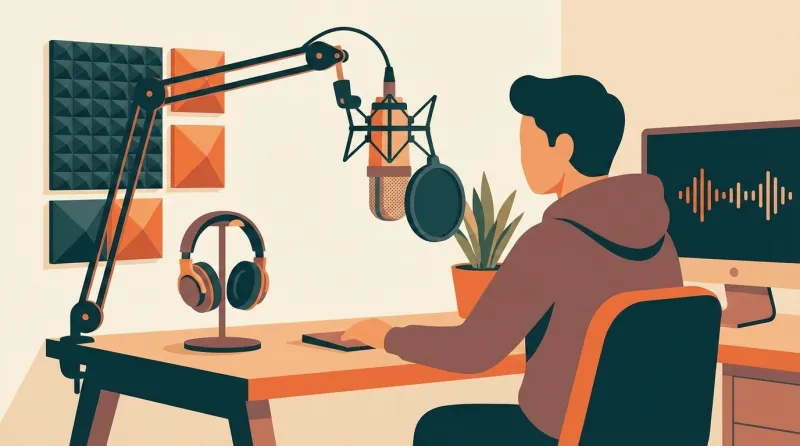
Starter Gear: How to Sound Professional Without Overspending
In 2026, audio quality matters more than ever. Listeners have better headphones than they used to, and any crackling or reverb will drive them away fast. That said, you don't need a $2,000 mixing board to sound great. One of these starter setups will do the job.
💡 Recommended Microphones (2026):
- Budget (under $60): Samson Q2U or Fifine K669B. Both are USB mics that plug straight into your laptop and sound genuinely good in home environments.
- Prosumer (under $250): Rode NT-USB+ or Shure MV7. These have built-in audio processing that makes your voice sound "radio-ready" right out of the box.
- Professional Setup: Shure SM7B + Focusrite Scarlett Solo interface. The industry standard — but it requires a bit more technical know-how to get right.
Don't underestimate room acoustics. Even the most expensive microphone won't save you in an empty room with bare walls. Record somewhere with plenty of soft surfaces — rugs, curtains, an open closet full of clothes. They absorb echo and give you that dry, clean, professional sound. For editing, try the free Audacity or the browser-based Adobe Podcast tool, which uses AI to clean up your audio to near-studio quality in seconds — no audio engineering degree required.

5 Monetization Methods: Turning Listeners Into Income
Making money from podcasting is a long game. Most creators start seeing meaningful income around episodes 20–30, which is roughly four to six months in at a weekly cadence. The good news is that the income compounds — a show with 50 solid back episodes attracts sponsors in a completely different league than one with five. Here are five approaches worth combining from the start.
| Method | Audience Required | Earning Potential | Best For |
|---|---|---|---|
| Patreon / Fan Support | 100+ loyal listeners | $200 – $3,000/month | Independent shows, passion projects |
| Sponsorships (Host-Read Ads) | 2,000+ downloads/episode | $500 – $8,000/campaign | Niche, expert, or authority shows |
| Affiliate Marketing (Link Recommendations) | Any size | $100 – $2,000/month | Reviews, tutorials, lifestyle shows |
| Own Products (E-books / Courses) | 500+ listeners | $3,000 – $30,000+/launch | Experts, educators, coaches |
| Consulting / B2B Work | Even a small, precise audience | $2,000 – $15,000/month | Business, legal, tech, finance shows |
💰 Earning Big Without Millions of Listeners
Niche podcasts earn the most money per listener. If you run a podcast about "fleet management for logistics companies" and 200 logistics directors tune in, a single consulting contract or B2B deal sourced through that podcast could be worth $30,000 or more. That's the real power of audio in 2026 — depth beats breadth every time.
Distribution: Spotify, YouTube, and the Content Repurposing Flywheel
In 2026, just pushing your RSS feed to one directory isn't enough. Your primary goals should be getting on Spotify (free through Spotify for Podcasters, formerly Anchor) and creating a video version for YouTube. Why YouTube? Because YouTube's recommendation algorithm is the most powerful discovery engine in the world — it actively finds new listeners for you in a way that no traditional podcast app can match. Don't sleep on Apple Podcasts either; it still commands a huge share of loyal listeners, especially in the premium demographic that advertisers pay top dollar to reach.
The other pillar is content repurposing. From one 40-minute episode, you should be creating:
1. 5 short clips (Reels / TikTok) featuring the sharpest moments.
2. A blog post (AI transcription + light editing).
3. A series of LinkedIn or Instagram posts.
The result? You do the work once, and your content shows up everywhere, creating a compounding reach effect and pulling in listeners from multiple platforms at once.

Legal Basics: Music, Taxes, and Copyright
Podcasting is a creative endeavor, but it comes with real legal obligations that a lot of first-timers forget about in the excitement of launching their first episodes.
🔴 Audio Copyright — Don't Skip This
Never use popular music (from radio or YouTube) as background in your podcast without a proper license. Even five seconds of a copyrighted track can get your episode pulled from Spotify and expose you to a DMCA takedown or worse. Stick to royalty-free libraries like the YouTube Audio Library (free) or paid subscriptions like Epidemic Sound or Musicbed. And when you run a paid sponsorship, the FTC requires you to disclose it clearly — your listeners need to know when you're recommending something in exchange for payment.
On the tax side: income from Patreon, sponsorships, and affiliate commissions is self-employment income in the US. You'll report it on Schedule C (Form 1040). Once you clear $400 in net self-employment income, you're required to file and pay self-employment tax (currently 15.3% on net earnings, though you can deduct half of it). Platforms like Patreon will issue a 1099-K once you cross $600/year. If you sell courses or digital products, platforms like Teachable or Gumroad will also issue 1099s. Keep records of all your gear and software purchases — they're fully deductible as business expenses. When in doubt, a quick consult with a CPA familiar with creator businesses is money well spent.
Audio Psychology: Keeping Listeners Engaged for an Hour
In audio, your voice is your only tool for building tension and momentum. Don't be a monotone robot. People listen to podcasts because they want to feel like they're sitting across from you at a coffee shop — relaxed, engaged, and learning something useful without feeling like they're in a lecture.
- Energy: Your energy level while recording needs to be about 20% higher than in a normal conversation. Microphones flatten emotion — you have to compensate with extra expressiveness. Smile while you talk. It genuinely comes through in the audio, and listeners notice within seconds.
- Structure: Every episode needs a Hook (why should I keep listening?), a Value section (the actual meat), and a Closing Call to Action (what should I do next?). No filler — your listener should feel like every minute was worth their time. If you'd skip a section yourself on re-listen, cut it.
- Pacing: Vary your speaking speed deliberately. Slow down for key points. Speed up for transitions. Silence — even a half-second pause — is a power tool, not a mistake to edit out.
- Interaction: Read listener comments on air. Answer questions in future episodes. Name people by their handles. Build a tribe, not just an audience. The hosts who make it long-term are the ones who make their listeners feel genuinely heard.
Action Plan: Your First Episode in 14 Days
Don't let perfectionism kill your idea before it launches. Work through these steps:
Days 1–3: Concept and Name
Pick one specific problem you'll solve for one specific type of person. Choose a name that's easy to remember and easy to spell when someone hears it for the first time. Check that the domain and social handles are available before you fall in love with it.
Days 4–7: Gear and Acoustic Tests
Order a microphone (the Samson Q2U is a great starting point at around $60). Record three test minutes, listen back critically, and fix the acoustics of your space. Add some throw pillows, close the curtains, and hang a few coats near the mic if you need to.
Days 8–12: Record Your "Episode Zero"
This is the episode where you answer: Who are you? Why should anyone listen to you? How often will new episodes drop? Edit it in Audacity and upload it to Spotify for Podcasters. Use Buzzsprout or Transistor if you want more robust analytics and automatic distribution to Apple Podcasts, Amazon Music, and iHeart Radio.
Days 13–14: Launch Day
Tell everyone you know. Ask them specifically for a follow and a 5-star review on Spotify and Apple Podcasts. Early social proof is critical for algorithmic visibility — both platforms push shows with strong early engagement to new listeners.
FAQ — Everything Aspiring Podcasters Ask
Does Spotify pay podcasters per stream?
Spotify does not pay royalties per play the way it does for music. Your income comes from your own sponsorship deals, affiliate links, listener support (Patreon, Supercast), or Spotify's invite-only ad programs. The platform is a distribution channel, not a payment mechanism — treat it that way.
Do I have to record with guests?
Not at all. Solo shows (monologue format) tend to build stronger personal authority and a more loyal audience. Interview shows can grow faster because you get audience crossover from each guest's following. The sweet spot most successful podcasters land on is roughly two solo episodes for every one guest episode.
How long should each episode be?
As long as it needs to be — no longer. In 2026, the sweet spot for most shows is 20 to 45 minutes. But consistency matters more than length. Publishing a solid 20-minute episode every single week beats a 2-hour marathon once a month every time. Show your audience they can count on you.
How do I know if my idea will actually work?
Record three episodes and put them out into the world. Nothing validates a concept faster than real listeners — or the absence of them. Don't wait for the perfect moment. It doesn't exist. Ship the imperfect version, learn from the feedback, and improve as you go.
Summary: Your Show, Your Rules
📋 Podcast Mastery — 10 Golden Rules
- Content is king, audio is queen: Without substance, no one stays. Without clean audio, no one starts.
- Your niche is your superpower: Be the best voice in a very specific space. Own it completely.
- Consistency builds trust: Set a publication day and never skip it. Your audience will plan around you.
- Build an ecosystem: The podcast is the heart. The clips, posts, and articles are the arms and legs of your business.
- Diversify your income: Combine Patreon with sponsorships and your own products — never rely on just one revenue stream.
- Zero music piracy: Only use tracks from legal, licensed sources. It's not worth the risk.
- Optimize episode titles for search: Your title should answer the specific question your ideal listener is typing into Google or Spotify.
- Be authentic: Don't be afraid of stumbles or verbal slip-ups — they humanize your brand and make you relatable.
- Analyze your data: Check where listener attention drops and use that to sharpen future episodes.
- Start today: Setting up hosting on Spotify for Podcasters takes five minutes. Record a 90-second intro on your phone right now.
Starting a podcast in 2026 is one of the most rewarding creative and business paths available online. You're building your own media channel — one you fully control — and developing a voice that reaches directly into the ears (and minds) of thousands of people. It's a relationship-based business that, given time and consistency, becomes one of the most stable and satisfying income sources you'll ever have. Whatever you want to talk about, your audience is already out there waiting for the first episode. Put on your headphones, pull up the mic, and start telling your story. Talk soon.
Comments (0)
No comments yet. Be the first!
Add a comment