Dropshipping is one of the most searched topics by people looking to start making money online without a lot of upfront capital. And honestly, it's easy to see why — on paper it sounds perfect: you sell products you don't own, your supplier ships them straight to the customer, and you keep the difference. No warehouse, no inventory, no thousands of dollars tied up in stock before your first sale.
Reality is messier than that. Dropshipping works — but it demands real marketing skills, patience, and the willingness to lose money during the learning phase. This guide covers everything you need to know to start a dropshipping business in 2026 without making the expensive mistakes that kill most stores before month three.
What is dropshipping and how does it actually work?
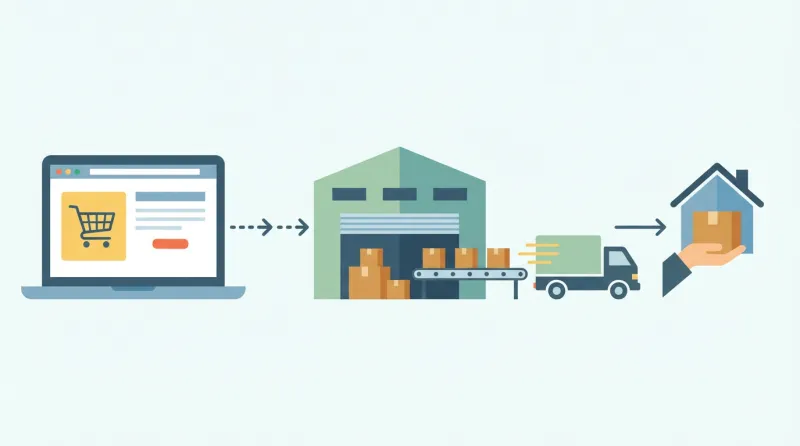
Dropshipping is a business model where you act as the middleman between a supplier (a wholesaler or manufacturer) and the end customer. The process is straightforward:
- You build an online store and list products at a marked-up price
- A customer places an order and pays you the full retail price
- You purchase the item from your supplier at wholesale cost, using the customer's shipping address
- The supplier ships the product directly to your customer
- Your profit = retail price minus wholesale cost minus ad spend and fees
The key difference from traditional e-commerce: you never buy inventory upfront or store it anywhere. That drastically lowers the barrier to entry — but it also means your margins per unit are thinner and you have less control over fulfillment quality.
Dropshipping in the US and UK — what the market actually looks like
Both markets have high expectations for shipping speed and seller credibility. US customers on Shopify stores increasingly expect delivery within 5–7 business days, and Amazon Prime has conditioned a huge chunk of online shoppers to want 2-day delivery. UK buyers are similar — Royal Mail First Class or next-day options from UK-based suppliers are the standard that converts.
Dropshipping from China (AliExpress, CJ Dropshipping) — cheapest products, widest selection, but standard shipping takes 2–4 weeks. This can work if you're transparent about timelines or if you use suppliers with US/EU warehouse stock. Without that transparency, expect chargebacks and bad reviews.
Dropshipping from US or UK suppliers (Spocket, Wholesale2B, SaleHoo) — higher wholesale prices, but delivery in 3–7 days. Customer satisfaction is substantially higher. Gross margins of 20–40% instead of 100–200%, but far fewer refunds and disputes.
How to start a dropshipping business — step by step
Below is a proven sequence for getting started from scratch. Every step matters. Skip one and you're increasing the odds of an expensive failure.
Don't try to sell everything. Choose a specific product category where there's a defined audience and you can realistically compete on something other than price. A good niche has: a clear target customer, products with margins above $15–20 per unit, and low return rates (avoid clothing without size guides, fragile electronics). Examples that consistently perform: dog accessories, kitchen gadgets, survival/outdoor gear, niche beauty products, desk and home office items.
Check eBay, Amazon, Etsy, and Google Shopping — is anyone already selling this? What are their prices? Is there room for your margin? Use Google Trends to check whether demand is seasonal. Use tools like Sell The Trend, Niche Scraper, or Minea to spot trending products before they're saturated. If the niche is already packed with sub-$5 items (cheap smartwatches, knock-off earbuds), keep looking.
This is the most critical step. Look for suppliers that explicitly support dropshipping: AliExpress with DSers, CJ Dropshipping (US and EU warehouses available), Spocket (US/EU suppliers, faster shipping), SaleHoo (vetted supplier directory), Worldwide Brands, Doba, or Wholesale2B. Always order a sample before listing. Check the supplier's return policy, estimated shipping times, and minimum order requirements. A supplier that takes 3 weeks to ship will generate endless support tickets.
Shopify is the dominant choice for dropshipping worldwide — plans start at around $29/month, setup is genuinely beginner-friendly, and the ecosystem of dropshipping apps (DSers, AutoDS, Zendrop) is unmatched. WooCommerce on WordPress is more flexible but requires more technical setup. BigCommerce and Wix are valid alternatives. Whichever you pick: professional design matters, an SSL certificate is non-negotiable, and your contact page, return policy, and shipping policy need to be visible before you run ads. Buyers check these.
Don't copy the supplier's description word-for-word. Write your own copy that focuses on benefits, not specs. Add your own photos — order a sample and photograph it yourself, or hire a cheap product photographer. Original content helps with SEO and builds trust. Copied descriptions from AliExpress listings are an instant credibility killer.
Meta Ads (Facebook and Instagram) and TikTok Ads are the top channels for dropshipping product discovery. Google Shopping works well for buyers who already know what they want. Start small — $20–$50/day — and test multiple products and creatives before scaling anything. Plan to spend $500–$2,000 in ad testing before you hit consistent profitability. This is the hardest part of dropshipping and where most people give up too early or too late.
Dropshipping is a real business and needs to be treated like one. In the US: form an LLC (filing fees range from $50 in Kentucky to $500+ in California) or operate as a sole proprietor with an EIN. Understand sales tax nexus rules — post the South Dakota v. Wayfair ruling, you may owe sales tax in states where you exceed certain revenue or transaction thresholds. In the UK: register as a sole trader (free) or form a limited company through Companies House (£12). VAT registration is required once you hit £90,000 turnover. Talk to an accountant before your first sale if you can — not after year one.
Comparing the main platforms for dropshipping
Choosing the right sales platform is one of your first real decisions. Here's how the main options stack up:
| Platform | Monthly Cost | Difficulty | Key Integrations | Best For |
|---|---|---|---|---|
| Shopify | From ~$29/mo | Low | DSers, AutoDS, Zendrop, Spocket | Anyone wanting to launch fast |
| WooCommerce | Hosting ~$5–15 + plugins | Medium | AliDropship, WooDropship, ShipStation | People comfortable with WordPress |
| eBay / Amazon | Commission 6–15% | Low–Medium | AutoDS, DSers, Sellbrite | Selling to buyers with existing trust |
| BigCommerce | From $39/mo | Low | Wholesale2B, Modalyst | Scaling beyond Shopify's transaction fees |
| Etsy | $0.20/listing + 6.5% fee | Low | Printify, Printful (POD focus) | Handmade-style or print-on-demand products |
For most beginners, Shopify with DSers or Spocket is the fastest path from zero to first sale. If you want to test the water with zero ad spend, starting on eBay or Amazon Marketplace gives you built-in traffic — though fees eat into already thin margins. Many experienced dropshippers start on a marketplace to validate a product, then move winning products to their own Shopify store where they keep more profit.
Where to find dropshipping suppliers
Finding a solid supplier is the question that trips up most beginners. Here are the proven sources:
US and EU-based supplier platforms:
- Spocket — curated US and EU suppliers with 2–5 day shipping, integrates with Shopify and WooCommerce
- SaleHoo — vetted supplier directory with 8,000+ wholesalers, good for finding domestic US suppliers
- Worldwide Brands — one of the oldest supplier directories, lifetime access fee, all suppliers are certified legit
- Wholesale2B — 1 million+ products, integrates with Shopify, eBay, Amazon, WooCommerce
- Doba — aggregator with push-to-store automation, monthly subscription
Global platforms (mainly China-origin):
- AliExpress + DSers — the biggest selection at the lowest prices, but standard shipping is 2–4 weeks unless you use US or EU warehouse stock
- CJ Dropshipping — faster fulfillment than AliExpress, US and EU warehouse options, more responsive support
- Zendrop — US-focused, 2–5 day US shipping on many items, branded packaging option
Dropshipping earnings — what you can realistically make
Here are real numbers, because that's what you're actually here for. Income in dropshipping depends heavily on niche, supplier, ad budget, and how good your marketing is.
- Testing phase (months 1–3): Likely at a loss or break-even — you're spending on ads and learning what doesn't work
- Working store with a good niche: $1,000–$5,000/month net after costs, assuming 10–20% net margin
- Established store (6–12+ months): $5,000–$20,000+/month net — but this takes real experience or a serious ad budget, or both
- Gross margin per product: 20–40% (US/EU suppliers) or 40–70% (China-origin products)
- Net margin after ads, fees, and returns: realistically 10–25%
Let's run a concrete example. You're selling dog accessories. You buy a product for $12 from a US-based supplier. You sell it for $34. Gross margin: $22. Subtract ad spend ($8 per sale on Meta Ads), Shopify transaction fees ($1.50), and an estimated return rate cost ($1.50) — you're left with around $11 net per order. At 100 orders per month that's $1,100. At 500 orders it's $5,500. Scale the ad spend and your store is a real business. Don't scale and it stays a side project.
It's also worth comparing dropshipping with other income models. If you want revenue without the risk of ad spend during the learning curve, freelance copywriting pays from the first client. If you want the simplest possible entry into e-commerce, selling on eBay or Etsy with existing traffic is a lower-friction starting point.
Common dropshipping mistakes — and how to avoid them
More than 90% of people who start dropshipping quit within three months. It's almost always due to one of the following mistakes, not some external market force:
- Too broad a niche — "I sell everything" means you can't write targeted ads, can't build a loyal audience, and can't stand out
- Never testing the product — selling something you've never actually held increases your return and dispute rate dramatically
- Too small an ad budget — dropshipping runs on paid traffic; trying to test with $50 total gives you statistically meaningless data
- Copying supplier descriptions verbatim — duplicate content tanks your Google rankings and looks unprofessional to real buyers
- Ignoring customer service — not responding within 24–48 hours leads directly to PayPal disputes and negative reviews on Trustpilot or Google
- Choosing suppliers only on price — the cheapest supplier is often the slowest to ship and the hardest to deal with on returns
- Operating without a registered business — in the US, running a business without proper registration (EIN, LLC, or sole proprietor filing) creates legal and tax exposure. In the UK, HMRC expects registration once you exceed the £1,000 trading allowance
Dropshipping, taxes, and legal requirements in the US and UK
Most tutorials skip this section entirely. Don't. Dropshipping is a real business from your first sale, and the legal side matters more than most beginners realize.
What you need to know:
- Business structure — In the US, form an LLC or register as a sole proprietor and get an EIN (free from the IRS). An LLC provides liability protection and costs $50–$500 depending on your state. In the UK, register as a sole trader (free, done through HMRC) or form a limited company via Companies House for £12.
- Sales tax (US) — Post-Wayfair, most states require you to collect and remit sales tax once you exceed economic nexus thresholds (often $100,000 revenue or 200 transactions in a state). Use TaxJar or Avalara to automate this or it becomes a nightmare fast.
- VAT (UK) — Mandatory registration once you hit £90,000 in annual turnover. Below that, you can voluntarily register. You'll file quarterly returns with HMRC.
- Income tax — In the US: report dropshipping income on Schedule C (sole proprietor) or through your LLC. Self-employment tax is 15.3% on top of income tax. In the UK: self-assessment tax return annually, national insurance contributions on profits.
- Consumer rights — As the seller of record, you're legally responsible for returns and complaints — even if the supplier caused the problem. In the US, PayPal and Stripe buyer protection policies effectively enforce this whether you like it or not. In the UK, the Consumer Rights Act 2015 gives buyers 30 days for a full refund on faulty goods.
- Data / privacy — If you're collecting customer data (you are), you need a privacy policy. If you're selling to UK or EU buyers, GDPR compliance is required.
Dropshipping without your own store — marketplaces as a starting point
You don't need to launch a Shopify store on day one. Starting on an existing marketplace is a legitimate strategy that lets you validate products and suppliers before investing in a standalone store.
- eBay — one of the most dropshipper-friendly marketplaces; built-in buyer traffic, no upfront store cost, and tools like AutoDS automate the order process. Fees are 10–15% of the sale price, which squeezes margins on low-ticket items.
- Amazon — massive traffic, but strict policies on dropshipping (you must be the seller of record, packaging cannot show the supplier's name). Fees are 8–15% plus fulfillment if you use FBA. Harder to get started, but the volume is unmatched.
- Etsy — ideal for print-on-demand dropshipping through Printify or Printful. Strong buyer intent, lower ad spend needed, but limited to certain product categories.
- Walmart Marketplace — growing rapidly, approval-based but less saturated than Amazon for some categories.
The typical progression: start on eBay or Etsy with zero ad budget to test which products actually sell. Once you've found 2–3 proven winners, build a Shopify store around those specific products and run paid ads to scale them. This approach costs less and wastes less time than building a full store before you know what sells.
FAQ — the most common questions about dropshipping
How much money do I need to start dropshipping?
The bare minimum is around $200–$500: Shopify plan, a domain, and a handful of product samples. But realistically, to properly test a niche and run enough ads to get meaningful data, budget $500–$2,000 that you're prepared to lose while learning. The money doesn't go into inventory — it goes into marketing. Anyone telling you that you can start with $0 is either selling you something or talking about organic TikTok, which takes months to gain traction.
Is dropshipping legal in the US and UK?
Yes, completely legal. Dropshipping is simply a fulfillment model where you use a third-party supplier. You do need to register your business, collect and remit the appropriate sales tax or VAT, and comply with consumer protection laws in whatever markets you sell into. The model itself isn't the issue — operating it like an unregistered cash business is what gets people into trouble.
How long does it take to become profitable?
Honestly? Three to six months for most people who stick with it consistently. The first couple of months are almost always a net loss — you're testing products, learning ad platforms, and building the foundation. Most stores that eventually succeed hit consistent profitability somewhere between month four and month six. If someone is promising you profit in two weeks, they're selling a course, not giving you real information.
Do I need any technical or coding skills?
No. Shopify, BigCommerce, and Wix are designed specifically for non-technical users — you can build a professional store without writing a single line of code. WooCommerce requires a bit more comfort with WordPress but still no actual development knowledge. What matters far more than technical ability is your skill at marketing, ad copywriting, and reading data. Focus there.
What products sell best in dropshipping?
Consistently strong performers: niche products with a passionate, targetable audience (dog owners, hikers, home gym users), impulse-buy items priced between $20–$60, and "problem-solver" products that demonstrate well in short video ads. Avoid: consumer electronics (high return rates and warranty headaches), fashion without clear sizing (huge return volumes), and seasonal products with no year-round demand. The goal is high perceived value relative to your wholesale cost, not the cheapest item possible.
Dropshipping vs. affiliate marketing — which is better to start with?
Depends on your strengths. Dropshipping gives you higher margins and full control of the customer relationship, but you're handling customer service, returns, and ad spend. Affiliate marketing is simpler — you're just recommending products via links — but commissions are lower (typically 3–10%) and you're dependent on traffic you've built over time. Many people run both simultaneously: a dropshipping store for active income and affiliate content for passive. Check our guide on affiliate marketing for a side-by-side comparison.
Does dropshipping still work in 2026?
Yes — but the easy version is dead. Throwing up an AliExpress store with 3-week shipping and running Facebook ads at a $5 CPM stopped working around 2020. What works in 2026: genuine niche selection, fast-shipping US or EU suppliers (or warehoused China stock), strong creative on TikTok and Meta, and building some form of brand rather than a generic storefront. The bar is higher than it was five years ago. That's not a reason to avoid it — it's a reason to approach it seriously instead of as a get-rich-quick shortcut.
Key takeaways
- ✅ Dropshipping = selling without inventory; your supplier ships direct to the customer
- ✅ Budget $500–$2,000 for your store setup, product samples, and first ad tests
- ✅ For fastest shipping and happiest customers: use US or EU suppliers (Spocket, SaleHoo, Zendrop)
- ✅ eBay or Etsy is the lowest-friction starting point if you want to validate before building a store
- ✅ Shopify + DSers or Spocket = the most popular beginner stack for an owned store
- ✅ Expect 3–6 months before consistent profitability — not 3–6 weeks
- ✅ Register your business properly: LLC or sole proprietor (US), sole trader or LTD (UK)
- ⚠️ Avoid cheap unvetted Chinese suppliers with long shipping times — they will damage your store's reputation
- ⚠️ Your main cost is advertising, not inventory — learn Meta Ads or Google Ads or hire someone who already knows them
Comments (0)
No comments yet. Be the first!
Add a comment