In a world dominated by unpredictable social media algorithms — where reach can drop 90% overnight — email marketing remains the only communication channel you truly own. Your mailing list isn't just a collection of addresses. It's a real business asset no one can take away from you. In 2026, as AI floods inboxes with mass-produced content, the creators who win are those who build genuine relationships through personal newsletters. The data is unambiguous: the average ROI of email marketing still sits at around $36–$40 for every dollar spent. It's the most powerful weapon in your make-money-online arsenal — as long as you know how to use it without landing in the spam folder.
Many people think email marketing is "outdated" or "too technical." That misconception costs thousands in lost revenue. In 2026, launching a newsletter is easier than ever — thanks to drag-and-drop builders and AI tools that help craft engaging content. The secret isn't having a million subscribers. It's having a few hundred engaged fans who genuinely look forward to your next email. This guide walks you through the entire journey: from creating your first lead magnet and choosing the right platform, to advanced monetization strategies — from paid subscriptions to evergreen automated funnels. Because your email list is your direct line to your audience's wallet.
Email marketing pairs perfectly with blogging for income and running Google and Facebook Ads campaigns. This is where sales close and long-term loyalty is built.
Why Your Email List Is Your Most Valuable Asset
Imagine Facebook suddenly banning your account, or Instagram changing its algorithm so only your closest friends see your posts. In an instant, you lose access to your entire audience. With an email list, you own the database. You can export it, move it to any platform, and send a message to your subscribers whenever you want. That peace of mind is worth a fortune in 2026.
There's also the sheer intimacy of the medium. An email lands in someone's personal inbox — right next to messages from their family and their bank. You have 100% of their attention, provided your subject line is compelling enough. Email allows for personalization that social media can only dream of. You can send completely different content to first-time readers than to loyal customers who've already bought your course or product.
ℹ️ Email Marketing ROI (2026):
- Average return: 3,600%–4,000%.
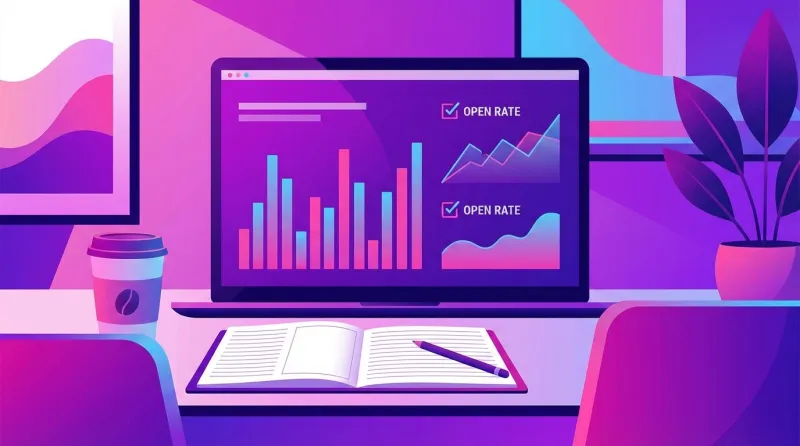
- Open Rate (OR): 20–30% for quality newsletters.
- Click-Through Rate (CTR): 2–5% is the industry standard.
- Sales effectiveness: 3× higher than social media.
How to Build an Email List from Scratch: The Funnel Explained
People don't sign up for "a newsletter" anymore. Nobody wants more email. People sign up to solve a specific problem. That means you need what's called a Lead Magnet — a free piece of value you give in exchange for an email address.
In 2026, the best lead magnets are: printable checklists, short video mini-courses (3-day sequences), Canva or Notion templates, and discount codes (for e-commerce). The process is straightforward: build a landing page featuring your magnet, promote it across your channels, and watch sign-ups roll in. The key is the promise of an immediate result. If your lead magnet promises to "change your life in a year," nobody will opt in. But if it promises "3 ready-to-use AI prompts to write proposals in 5 minutes" — your list will take off.
One underrated element is the thank-you page after sign-up. Most people leave it as a blank "check your inbox" screen. Smart newsletter operators use it to make an immediate low-ticket offer, ask for a social follow, or invite new subscribers to join a free community. Your thank-you page is some of the warmest traffic you'll ever get — use it intentionally, not as an afterthought.

Tools 2026: Which Newsletter Platform Should You Choose?
The right tool depends on your business goal. Don't just look at price — look at automation capabilities. In 2026, email platforms must be able to send messages automatically based on user behavior (e.g., if someone didn't open email A, send them email B instead).
- MailerLite: Best choice for beginners. Very intuitive interface, free up to 1,000 subscribers, with an excellent landing page builder built in.
- ConvertKit (Kit): The go-to for content creators. If you run a blog or sell courses, ConvertKit has the best segmentation and tagging systems on the market.
- Beehiiv: The rising star. Built by ex-Morning Brew team. Great for newsletters as a media product, with built-in ad network and referral system.
- Substack: If your only goal is writing and monetizing through paid subscriptions. They handle everything — hosting, payments, discovery — but take 10% of your earnings.
- Mailchimp: The most recognizable name globally. Solid for small businesses and e-commerce integrations, though automation gets pricey at scale.
- ActiveCampaign: For professionals who need a full CRM and sophisticated B2B sales automations. Serious power, serious price tag.

How to Make Money From a Newsletter: 5 Proven Methods
Monetizing your email list is a process that starts from the very first subscriber. Don't wait until you hit 10,000 — monetize from day one.
- Paid Subscription (Premium): The Substack model. Publish a free weekly newsletter, and lock your deep-dive analyses and reports behind a paywall (e.g., $5–$10/month). Even 200 paying subscribers at $7/month = $1,400 MRR.
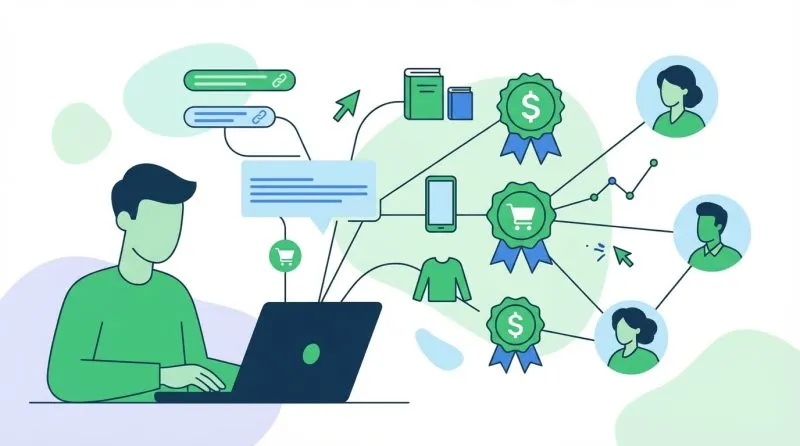
- Affiliate Marketing: Recommend tools, books, or software you actually use. Affiliate links in email convert far better than on social media because your readers trust your recommendation. Networks like Impact, ShareASale, Awin, and Amazon Associates are great starting points.
- Sponsorships and Advertising: Sell a placement in your newsletter (a "sponsor slot"). With a list of 5,000 engaged subscribers, a single dedicated email can earn $200–$5,000+ depending on your niche. Platforms like Passionfroot, Paved, and Swapstack connect newsletter creators with brand sponsors.
- Selling Your Own Products: Online courses, e-books, consulting calls. Your newsletter is the best launchpad for any new product. Your subscribers buy at 10× the rate of cold traffic from ads.
- Evergreen Funnel: Set up a sequence of 10 emails that every new subscriber receives automatically. At the end of the sequence, make your product offer. Revenue flows in passively — even while you sleep.
💰 How Much Can You Realistically Earn From a List?
The industry rule of thumb: each active subscriber is worth roughly $1 per month. If you have 2,000 subscribers, your newsletter should be generating around $2,000/month through a mix of the methods above. If you're earning less — your funnel needs optimization.

Legal Compliance: CAN-SPAM, GDPR, and How to Stay Out of Trouble
Building an email list involves processing personal data. In 2026, regulators on both sides of the Atlantic are serious about spam and consent violations. Play it clean from the start if you want a business built to last.
🔴 Email Marketing Law (CRITICAL)
Never add email addresses manually without the owner's explicit consent. Every opt-in form must include clear consent checkboxes (for commercial emails and data processing). Use a Double Opt-In model: after entering their email, the subscriber must click a confirmation link. This protects you from spam accusations and builds a higher-quality list. Additionally, every email you send must include an Unsubscribe link in the footer — this is legally required under CAN-SPAM (US), CASL (Canada), and UK PECR. For European audiences, full GDPR compliance applies.
If you're earning from your newsletter, be aware of tax obligations. In the US, platforms like Substack and Stripe will issue a 1099-K if your earnings exceed $600/year. Report that income on Schedule C as self-employment income. In the UK, HMRC requires self-assessment once you exceed the £1,000 trading allowance. Keep records of all newsletter-related expenses (platform fees, domain costs, design tools) — these are fully deductible.
Beyond legal compliance, there's a practical deliverability argument for clean list-building. ISPs (Gmail, Outlook, Apple Mail) track engagement signals. A list full of people who never consented to your emails — or who forgot they signed up — will generate spam complaints and low open rates. That tanks your sender reputation, meaning even your most engaged subscribers start receiving your emails in the Promotions tab or worse. Double opt-in is not bureaucracy — it's self-protection.
The Psychology of Writing: How to Get People to Open Your Emails
In 2026, the biggest challenge is cutting through the noise in someone's inbox. Your email competes with Amazon deals, bank alerts, and hundreds of other creators. You have about one second for the reader to decide: "open or delete?"
- Subject Line = 80% of your success: Use emotion, questions, or information gaps (e.g., "What your financial advisor won't tell you..."). Never write "Newsletter #45" — it's the most boring subject line imaginable. A/B test two subject lines every time you send — most platforms let you split-test to 20% of your list and auto-send the winner.
- Write to one person: Drop phrases like "Dear Readers." Write as if you're emailing your best friend. Use "you," "your," "for you." That intimacy is what makes people feel seen. The reader should never sense they're one of thousands.
- Storytelling: Start with a short anecdote or a problem you personally dealt with. Then transition to the insight or the offer. People love stories. They scroll past dry facts. The pattern "problem → story → lesson → call to action" has driven email engagement for decades and still works in 2026.
- Send time matters — but less than you think: Tuesday and Thursday mornings (8–10am local time) perform best on average, but your specific audience may differ. Check your platform's analytics after the first 20 sends and adjust from there.
One more thing most email guides ignore: your "From" name is just as important as your subject line. "Sarah from The Freelance Dispatch" dramatically outperforms a faceless brand name like "Marketing Team." People open emails from people, not from logos.
Action Plan: Your First Newsletter in 7 Days
Don't wait for the "perfect template." Start building your list right now. Work through these steps:
Days 1–2: Create Your Lead Magnet
Pick one thing you can give people for free. A one-page PDF checklist made in Canva works perfectly. Solve one small, specific problem for your target reader.
Days 3–4: Set Up MailerLite
Create a free account. Build a simple sign-up landing page. Include only a headline, an image of your PDF, and an email field. The fewer distractions, the higher the conversion rate.
Days 5–7: Tell the World
Add the sign-up link to your Instagram bio, pin it under your YouTube videos, and send it to your personal contacts. Ask for honest feedback. Your first 10 subscribers are the most important milestone you'll hit.
FAQ — Everything You Need to Know About Building a Newsletter
How often should I send emails?
In 2026, the baseline is at least once a week. Send less frequently and people forget who you are — when you eventually reach out, they'll mark you as spam. Creators with the strongest sales results typically email 2–3 times per week.
Do I need my own domain email address?
Absolutely yes. Sending a newsletter from a Gmail or Yahoo address means 90% of your emails go straight to spam. You need a professional address (e.g., [email protected]). A custom domain costs $10–$15/year, and the deliverability improvement is priceless.
What if people unsubscribe from my list?
Celebrate it. People who unsubscribe were never going to buy from you anyway. Their departure cleans your list and improves your open and click rates — which Gmail and Outlook interpret as signals of high-quality content. A smaller, more engaged list always outperforms a bloated one.
Can AI write my newsletters for me?
It can help with outlines and subject line variations, but the heart of your newsletter must be your unique voice and lived experience. Your readers subscribed because of you — not ChatGPT. Use AI as an editor, not a ghostwriter.
Conclusion: Build Your Digital Fortress
📋 Email Marketing Mastery — 10 Golden Rules
- Your list is your property: No algorithm can shut it down or take it away.
- Your lead magnet drives growth speed: Give real value upfront.
- Double opt-in is non-negotiable: Build your list legally and cleanly.
- The subject line is the gate: Spend half your writing time on it.
- Consistency builds habit: Pick your send day (e.g., Tuesday 10am) and stick to it.
- Diversify your monetization: Combine affiliate links with your own products.
- Clean your list regularly: Remove inactive subscribers to protect deliverability.
- Personalize: Use the reader's first name and segment your list by behavior.
- Test your automations: Make the machine earn money while you sleep.
- Start today: Your first subscriber matters more than your thousandth.
Email marketing in 2026 isn't just about sending messages — it's about building a digital fortress around your business. It's the only place online where you can have an honest, deep conversation with your audience and deliver value directly to their attention. Whether you run a small blog, a growing e-commerce brand, or you're just looking for a way to make money online — building an email list should be your number-one priority. Stop being a hostage to algorithms. Become the owner of your own audience. The inbox is waiting for your first send. Go build it.
Comments (0)
No comments yet. Be the first!
Add a comment