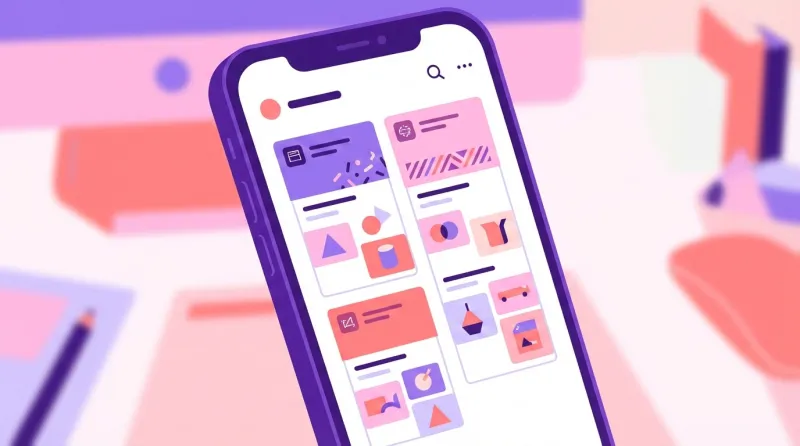
When most people think of Pinterest, they picture boards full of home decor inspo, healthy dinner recipes, or tattoo ideas. That mental shortcut, though, is costing a lot of creators thousands of dollars in untapped potential. Pinterest is not a social network in the traditional sense. It is a visual search engine — one that works far more like Google than it does like Instagram. And that distinction is exactly what makes Pinterest one of the most effective platforms for making money online in 2026.
This guide is not about chasing likes or follower counts. We are going to focus on the specifics: how to use Pinterest SEO mechanics so your content reaches hundreds of thousands of users completely for free, and how to convert that traffic into real income through affiliate marketing, selling your own products, and building an email list.
How Much Can You Make on Pinterest? (Earnings Table)
Making money on Pinterest is a compounding process. Unlike Facebook, where a post lives for a few hours, a single Pin can drive traffic for years. Here are realistic earning ranges based on monthly reach and your chosen monetization method:
| Level / Monthly Views | Primary Method | Realistic Earnings (USD) | Difficulty |
|---|---|---|---|
| Beginner (10k – 50k views) | Direct affiliate links | $150 – $500/mo | Low |
| Intermediate (100k – 500k views) | Affiliate + blog display ads | $800 – $2,500/mo | Medium |
| Advanced (1M+ views) | Own products + courses | $5,000 – $15,000+/mo | High |
💰 Pinterest income is a marathon, not a sprint
The real magic of Pinterest is the compound effect. A Pin you create today might earn you your first commission in three months — and then keep generating it steadily for the next three years. That is about as close to genuine passive income as you will find in online marketing.
Understanding Pinterest SEO: Your Path to Free Traffic
To make money on Pinterest, you first need to be found. On Instagram you are battling chronological feeds and declining organic reach. On Pinterest you are competing for keywords. When your Pins are described correctly, they show up in search results for people who are already looking to buy something — not just browse.
Keywords: Where Exactly Should You Put Them?
Pinterest's algorithm scans text in several places. You need to make sure your target phrases appear in each of these spots:
- Profile name and bio: Do not write "Emma — I love baking". Write "Emma | Air Fryer Recipes and Healthy Meal Prep".
- Board titles: Skip the poetic names. Use clear, searchable titles like "Summer Outfit Ideas 2026" or "Keto Dinner Recipes".
- Board descriptions: This is where you can fit a naturally-written paragraph packed with relevant keywords.
- Pin titles and descriptions: This is the most critical element. Answer the question a searcher is actually asking: "What will I find when I click this image?"
💡 Trend-finding trick
Use Pinterest's own search bar. Type your core topic — say, "home office" — and watch the autocomplete suggestions. Those are live keyword ideas that real users are searching for right now. Pinterest Trends (free tool) takes this even further and shows you seasonal search volume data.

Affiliate Marketing on Pinterest: How to Do It Right in 2026
Affiliate marketing is the simplest way to get started. You do not need your own product, inventory, or customer support. You recommend other people's products and collect a commission — typically anywhere from 3% to 50% for digital products. Some of the best affiliate networks for Pinterest creators include Amazon Associates (3–10% on physical products), ShareASale, Impact, CJ Affiliate, Awin (especially strong in the UK), and ClickBank for digital offers.
Two Linking Approaches:
✅ Direct linking
- Fast setup — just drop your affiliate link directly into the Pin
- Works great for physical products (Amazon, Etsy, Target)
- Lower friction for the user — one click to purchase
❌ Bridge page linking
- Requires a blog or simple landing page
- Lets you build an email list along the way
- Far higher conversion rate — you can explain the product's benefits in detail
- Safer — Pinterest sometimes flags or restricts direct affiliate links
How to Create Pins That People Actually Click
Pinterest is a visual platform — full stop. If your image looks amateurish, nobody will click, no matter how good the product behind it is. In 2026 the benchmark is Vibrant Content: saturated colors, bold and readable typography, and high contrast between the background and the text overlay.
2:3 ratio is the only format worth using
Vertical Pins (1,000 x 1,500 px is the sweet spot) take up the most real estate on a mobile screen — and over 80% of Pinterest usage is on mobile. Square or landscape Pins simply disappear in the feed and typically see around 70% lower click-through rates.
Bold text overlay on every Pin
Pinterest users scroll fast. You need a large, clear headline that instantly communicates a benefit. Instead of "Running Shoes", write "TOP 5 Running Shoes That Will Save Your Knees in 2026". Lead with the payoff, not the label.
Consistent branding across all Pins
Stick to the same fonts and color palette throughout your profile. Over time, your audience starts recognizing your Pins in the feed before they even read the text — that brand recognition builds trust and steadily increases your click-through rate (CTR).
Essential Tools: Work Smarter, Not Harder
Running a Pinterest account that actually earns requires consistency — think 1–3 new Pins every single day. Doing that manually is a fast track to burnout. Here are the tools that will keep you sane (and keep your account growing while you sleep):
| Tool | What it does | Price |
|---|---|---|
| Canva | Pin design with ready-made templates | Free / $14.99/mo (Pro) |
| Tailwind | Pin scheduling + AI caption writer | Free (limited) / from $14.99/mo |
| Pinterest Trends | Discover what's gaining momentum | Free |
| Claude / ChatGPT | Write SEO-optimised Pin descriptions fast | Free |

Tax and Legal: Staying Above Board in 2026
Making money online is not a game of hide-and-seek with the tax authorities. In 2026, the rules are clear and the compliance systems are getting sharper every year. Here is what you need to know if you are based in the US or UK.
🔴 The IRS and HMRC are watching — here is what triggers reporting
US: Affiliate networks must send you a Form 1099-NEC if your earnings exceed $600 in a calendar year. Even below that threshold, you are still legally required to report the income yourself. Self-employment tax kicks in at $400 net profit — so keep records from day one. UK: HMRC's £1,000 trading allowance means your first £1,000 of online income is tax-free. Above that, you need to register for Self Assessment. Your personal allowance is £12,570 before income tax applies, but National Insurance (Class 4) starts on profits above £12,570 at 6%. Do not wait until you are already earning well to sort this out.
FTC and ASA Rules: How to Label Affiliate Pins
Every affiliate Pin must be clearly disclosed. In the US, the FTC requires you to use plain-language labels like #ad or #affiliate — prominently, not buried. In the UK, the ASA and CAP Code apply the same standard. Failing to disclose can result in formal enforcement action, public warnings on the ASA register, or even FTC fines. The rules apply whether you have 200 followers or 200,000.
How to Handle Your Affiliate Income
If you are a sole trader in the US, you report affiliate income on Schedule C of your Form 1040. Keep a simple spreadsheet of every commission payment and every business expense (tools, subscriptions, hosting) — those expenses reduce your taxable profit. In the UK, sole traders file a Self Assessment return each January. If your Pinterest income grows beyond a side hustle, consider setting up a Limited Company (UK) or an LLC (US) for liability protection and potential tax advantages — but for most beginners starting out, sole trader or self-employed status is perfectly fine.
Your Action Plan: The First 7 Days on Pinterest
Stop reading, start doing. Here is exactly what to work through this week:
- Day 1: Create a free Pinterest Business account and research 10 keywords in your niche using the search autocomplete and Pinterest Trends.
- Day 2: Set up 5 Boards with keyword-rich titles and well-written descriptions.
- Day 3: Build 10 Pin templates in Canva using the 2:3 (1,000 x 1,500 px) format.
- Day 4: Sign up for 2–3 affiliate programs (Amazon Associates is the obvious starting point; add ShareASale or Impact for more product variety).
- Day 5: Create and publish your first 5 Pins with properly disclosed affiliate links.
- Day 6: Find and join relevant Group Boards in your niche to extend your reach to existing audiences.
- Day 7: Check Pinterest Analytics and see which Pins have already started generating clicks — that tells you what to do more of.
Frequently Asked Questions
Does Pinterest block affiliate links?
Direct links to Amazon and most major affiliate networks typically go through without issues. What Pinterest does flag are link shorteners (like bit.ly) and some aggressive redirect chains. The safest approach — and the one that converts best anyway — is to send traffic to your own blog or landing page rather than dropping a raw affiliate link into a Pin.
How many followers do I need before I can start earning?
Unlike Instagram — none. Pinterest is a search engine, not a follower-driven platform. You can have 10 followers and 500,000 monthly views because the algorithm surfaces your Pins to searchers, not just to people who already follow you. Your SEO quality matters far more than your follower count.
Do I have to post Pins every single day?
Consistency matters much more than volume. It is far better to post 1 Pin every day for 30 days than to upload 30 Pins in one session and then go quiet for a month. The algorithm rewards steady, regular activity. Use a scheduler like Tailwind to automate this so you batch the work once a week instead of logging in daily.
Are smartphone photos good enough for Pinterest?
They can be, as long as the shot is well-lit and visually clean. That said, the Pins that consistently perform best on Pinterest are graphics with a text overlay — not raw photos — and those are easiest to create in Canva using high-quality stock images. A polished Canva template will almost always outperform a smartphone photo on its own.
Which niches earn the most on Pinterest?
Anything with strong visual appeal tends to do well: home decor, fashion (especially modest fashion and plus-size), recipes (particularly keto, air fryer, and meal prep), DIY and crafts, and wedding planning. But do not overlook less obvious categories like personal finance and FIRE, travel hacks, and educational content (checklists, infographics, budget templates) — these convert exceptionally well with affiliate products because the audience is already in a buying or planning mindset.
Do I have to show my face?
Not at all. Pinterest is built around ideas and products, not personalities. The vast majority of accounts generating millions of monthly views are completely anonymous — no face, no name, no personal brand required. If you prefer to stay behind the scenes, Pinterest is probably the best platform for you out of all the major content channels.
Summary — Pinterest in 10 Key Points
📋 Key Takeaways
- 1. Pinterest is a visual search engine, not a social network — SEO drives results, not follower count.
- 2. Consistency (1–3 Pins per day) beats one-off viral moments every time.
- 3. Vertical is king — use only the 2:3 ratio (1,000 x 1,500 px).
- 4. Direct affiliate linking is a solid starting point, but a blog or landing page gives you long-term stability.
- 5. Keywords belong in the Pin title, description, board name, and the image itself.
- 6. Use Canva and Tailwind to cut content production time by roughly 80%.
- 7. Always disclose affiliate links (#ad, #affiliate) — FTC rules in the US and ASA rules in the UK are not optional.
- 8. Track your income from day one — a Form 1099-NEC or HMRC Self Assessment return will come eventually.
- 9. Focus on genuinely solving problems for your audience — the commissions follow naturally.
- 10. Pinterest rewards patience — expect your first meaningful results around 2–3 months in, and serious income after 6–12 months of consistent work.
Comments (0)
No comments yet. Be the first!
Add a comment