In 2026, the line between "entertainment" and "work" has blurred for millions of people worldwide. Gaming is no longer written off as wasted time in front of a screen — it's become a fully-fledged entertainment industry that generates more revenue than film and music combined. For you, that means one thing: you can turn your love of games into a professional, stable, and genuinely rewarding income stream. Whether you have the competitive edge for esports, the charisma to entertain a streaming audience, or the analytical mind that catches bugs before players do — the gaming market in 2026 has a seat at the table for you, and real money to match. This isn't the old dream of "being the next famous YouTuber." It's a real career path with clearly defined steps.
Most people assume that making money from games is reserved for the top 0.1% of players on the planet. That's the most persistent myth in gaming — and it stops talented people before they ever start. In 2026, the majority of people earning a living from games aren't pro players. They're educators, QA testers, and content creators. You can build an entire brand around one niche game, earn real money flipping virtual items, or stress-test server stability for major developers. In this guide, we'll break down the gaming world piece by piece. I'll show you how to monetize a Twitch or YouTube channel from your very first viewer, how to crack your way into a professional esports organization, and exactly what risks come with the digital item market (skins, in-game cosmetics). Because in the age of AI and Web 3.0, your mastery of virtual worlds is genuinely a skill of the future.
Gaming is also a perfect launchpad for anyone interested in growing a YouTube channel or getting into video editing. The gaming industry is arguably the best crash course in modern marketing and content production available anywhere.
Streaming on Twitch and YouTube: Building Your Digital Tribe
In 2026, streaming isn't just "gaming on camera" — it's being a showman and a community leader. The biggest streamers make millions, but the foundation of every single one of their successes is the same: consistency and authenticity. If you want to earn on Twitch, you need to accept one uncomfortable truth: viewers don't show up for your mechanical skill (though it helps). They show up for you — the banter, the reactions, the chat interaction. And in 2026, going multi-platform is non-negotiable: whatever you broadcast live on Twitch needs to be cut into short clips and pushed out as YouTube Shorts and TikToks to funnel fresh eyes back to your stream.
Monetization in 2026 is way beyond donations in a tip jar. It's a sophisticated system of paid subscriptions, hardware brand partnerships, and energy drink sponsorships. There's also a growing trend toward on-demand subscription models — fans pay for access to your private coaching vault or unaired content. Here's the math that matters: each loyal viewer is worth roughly $1–3 per month across all support mechanisms combined. Get 500 genuinely loyal fans and that's already a meaningful monthly check, paid out by platform systems automatically.
On Twitch, the path to monetization is structured. You can apply for Affiliate status once you hit 50 followers, 500 total minutes broadcast, 7 unique broadcast days, and 3 average concurrent viewers — achievable within a few months of consistent effort. Affiliate unlocks subscriptions ($4.99/mo standard, with a 50/50 split — you keep $2.50) and Bits ($0.01 each, roughly 70% goes to you). The next tier is Partner, which typically requires 75 average concurrent viewers sustained over 30 days. Partners often negotiate better rev splits and get priority support. On YouTube Gaming the monetization threshold is 1,000 subscribers and 4,000 watch hours (or 10M Shorts views), but discoverability is significantly better — YouTube's algorithm actively surfaces gaming content to new audiences in a way Twitch never has.
ℹ️ How Does a Streamer Actually Make Money in 2026?
- Subscriptions (Subs): Viewers pay a monthly fee for channel badges, emotes, and an ad-free experience.
- Donations / Tips: Direct payments during the stream via PayPal, Streamlabs, or platform-native tools like Twitch's Cheering (Bits).
- Ads: Revenue from ads served by the platform — typically $2–5 CPM depending on your audience demographics.
- Sponsorships: Paid product placements (that keyboard on your desk, the chair behind you, the energy drink in your hand).
- Merch: Selling branded clothing, mousepads, or accessories to your fanbase through Printful, Teespring, or your own store.
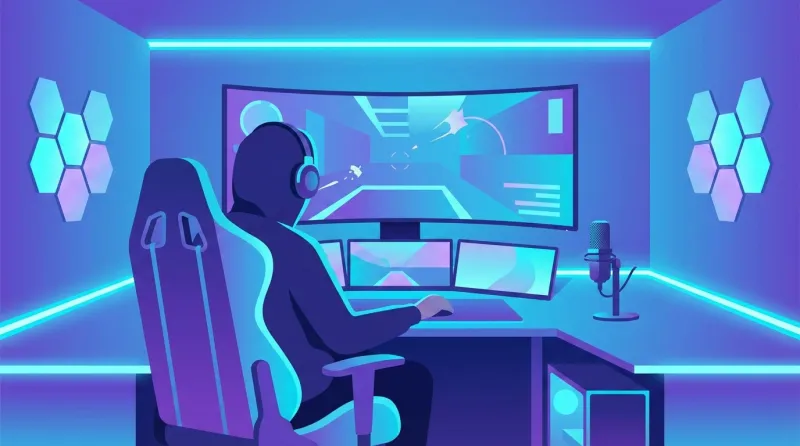
Esports: Do You Have What It Takes for a Pro Career?
Esports in 2026 is a fully professional discipline — nutritionists, sports psychologists, six-figure contracts. The bar for entry into top-tier organizations like Team Liquid, Cloud9, 100 Thieves, or FaZe Clan is brutally high, but the ladder is clearly defined. It starts with ranked play, then open qualifiers, then semi-pro rosters, then (if everything goes right) a professional contract. In 2026, esports scouts watch your social media behavior as closely as your in-game stats — your personal brand matters before anyone offers you a contract.
The money in esports isn't only tournament prize pools. The real income for most pros is a base salary. In North America and Europe, a mid-tier professional in games like CS2, Valorant, or League of Legends typically earns between $40,000–$150,000 per year in base salary alone. Top-tier players (think TenZ, S1mple-level talent) can reach $1M–$10M annually when you factor in streaming deals, sponsorships, and prize splits. At the amateur level, platforms like FACEIT, ESEA, and GameBattles run open tournaments with $50–$5,000 prize pools — real money you can earn right now while grinding up the ladder. But keep one fact firmly in mind: most pros retire before 30, moving into coaching, analysis, or content creation. The career window is short — plan accordingly.
| Gaming Path | Difficulty to Start | Earning Potential | Income Stability |
|---|---|---|---|
| Streaming (Twitch/YouTube/Kick) | Medium | Unlimited ceiling | Low initially |
| Esports (Pro Player) | Very High | High (contracts + prize pools) | Medium (form-dependent) |
| Game Testing (QA) | Low / Medium | $40,000–$65,000/yr full-time | Very High (salaried) |
| Item Trading (Skins) | Low | Variable (speculation) | Low |
| Content Creator (Shorts/TikTok) | Low | Medium (brand deals) | Medium |
💰 Making Money on Skins and Virtual Currency
The cosmetics economy in games like CS2 and Roblox is a multi-billion-dollar speculative market. In 2026, skilled skin traders ("flippers") profit by understanding scarcity trends and timing drops correctly — the Steam Marketplace alone has over $4 billion in estimated skin value in circulation. But this demands starting capital and a high tolerance for volatile price swings. Don't think of this as "playing games." Think of it as trading niche collectible assets — because that's exactly what it is. Treat it like any other speculation: only risk money you can afford to lose.

Game Testing: Dream Job or Tedious Grind?
A game tester (QA Tester) is one of the most reliable ways to break into the game development industry. In 2026, as game complexity continues to balloon, major studios — think Riot Games, Blizzard, EA, Ubisoft — hire hundreds of QA contractors and full-timers just to catch the bugs that would otherwise destroy a launch. This is not "playing games for fun". This is jumping into a wall 200 times in a row for four hours to verify whether your character clips through the geometry. Glamorous? No. Real job? Absolutely.
You don't need a computer science degree to get started. What you do need is analytical thinking, attention to detail, and strong written communication skills — bug reports are written in English regardless of where you're based, and a badly-written report is useless to a developer. Entry-level QA testers in the US typically earn $15–$25/hr as a contractor, and full-time QA roles at established studios average $40,000–$65,000/yr according to Glassdoor. For freelance testing, platforms like PlaytestCloud pay around $9 per 15-minute mobile playtest session — not a full income, but a legitimate way to build a portfolio and get genuine experience while you're job hunting. Getting into QA also opens real doors: Level Designer, Producer, Systems Designer — nearly every path in game development respects QA experience as foundational training.

How to Start Making Money Gaming: Your 2026 Action Plan
The gaming market is brutal if you go in without a plan. In 2026 you need to be systematic and build a personal brand from day one. Here's exactly what to do in your first 30 days:
Pick Your Main (Game + Style)
Don't hop between titles. Choose one game where you'll be either an expert or an entertaining underdog. Check whether the game has a Twitch audience — do people actually enjoy watching it, not just playing it? Niche games with passionate communities often outperform popular titles drowning in a sea of streamers.
Technical Setup (Days 1–7)
Optimize your system for streaming using OBS Studio (free and industry-standard). Invest in a good microphone before upgrading your GPU — viewers will forgive 1080p video, but they'll click away immediately if your audio sounds like a broken vacuum cleaner. Set up professional overlays and alerts via Streamlabs or Overlay.gg.
Build Your Reach Funnel (Days 8–25)
Stream 3 times a week on a consistent schedule. Cut at least 5 clips from every stream and push them out as YouTube Shorts and TikToks. This is your only free traffic engine for pulling new viewers onto your live channel. Consistency here is everything — the algorithm rewards reliability.
First Monetization (Days 26–30)
Sign up for Streamlabs or StreamElements to enable tips and donation alerts. Add affiliate links (Amazon Associates, specific peripheral brands) to equipment you actually use. Hit Twitch Affiliate requirements and flip the sub button on. Celebrate the first dollar — it means the system works.
Legal & Taxes: What Every Gamer Earning Money Needs to Know
Making money from games is income — and in 2026, the IRS and platform compliance teams are paying close attention to payments from Twitch, YouTube, and PayPal. Getting the legal side right from the start saves you a genuinely painful headache down the road.
⚠️ Taxes & Legal — The Non-Negotiables
Twitch, YouTube, and PayPal are all required to send you a Form 1099-K if you earn $600 or more in a calendar year — and they report it to the IRS. Donations and tips are generally treated as taxable income for content creators (not charitable gifts), so budget accordingly. If your net self-employment income exceeds $400/yr, you owe self-employment tax of 15.3% (Social Security + Medicare) on top of regular federal income tax — file a Schedule C with your return. If gaming becomes a serious side hustle, consider forming an LLC to separate business and personal liability and unlock more deductible expenses (equipment, software, internet). On the gaming content side: copyright strikes are real. Most major studios have a Video Policy allowing streaming and monetization, but Nintendo in particular has historically enforced strict rules. Always check a game's streaming policy before starting a monetized series — one DMCA claim can wipe your entire archive.
In 2026, remember that the hobby vs. business distinction matters to the IRS. If you claim gaming as a business, you can deduct expenses — but the IRS expects to see a profit motive and real business activity. Three profitable years out of five is one benchmark they use. Keep receipts, track expenses, and if you're unsure, talk to a CPA who works with content creators. There are plenty who specialize in exactly this.
Gamer Psychology: How to Avoid Burning Out
The biggest threat to any gaming career isn't competition — it's turning something you love into a dreaded obligation. When your livelihood depends on viewer counts and match results, the game stops being a release. In 2026, burnout rates among professional streamers are at a record high — and the stories of creators quitting after years of grind are everywhere.
- The "Offline Days" Rule: Take at least 2 full days off every week — no gaming, no streaming, no monitoring chat. Your brain needs a genuine break from the digital noise, or your content quality and reaction times both deteriorate.
- Physical Exercise: This sounds obvious to the point of cliché, but 30 minutes of movement per day measurably improves reaction times and emotional stability after losses. The top esports organizations now employ physical trainers as standard — there's a reason.
- Diversify Your Content: Don't be "just the gamer." Talk about tech, culture, music, your life outside screens. Build your brand around your personality, not a single title — because every game dies eventually, and when it does, you need to still have an audience that cares about you.

FAQ — Making Money Gaming: Your Questions Answered
How much money can you realistically make streaming on Twitch?
A streamer with 100 consistent average viewers can realistically pull in $500–$2,000/month from subscriptions, Bits, and tips. That's a solid side hustle. Channels averaging 500+ concurrent viewers are looking at a full-time income in the $4,000–$10,000/month range — though reaching that level typically takes 1–3 years of consistent work. Top creators (xQc, Pokimane, Asmongold tier) earn $50,000–$1M+ per month, but they're outliers, not the baseline.
Does age matter in esports? Is 25 too late to go pro?
Honestly, yes — reaction time peaks between ages 16 and 22. If you're 25 or older and haven't already played at a semi-pro level, breaking into a top-tier pro roster against 18-year-old prospects is an uphill battle. That said, esports careers don't end at 25 — they shift. Coaching, analyst roles, scouting, and casting all value game knowledge and experience over raw twitch reflexes. And streaming? Age is completely irrelevant there. Build around what you're actually good at.
How do I get a game testing job with no experience?
Start with freelance platforms like PlaytestCloud to build a testing portfolio and get used to writing structured bug reports. Follow QA job boards on LinkedIn, Glassdoor, and studio career pages directly (Riot, EA, Blizzard, Ubisoft all post contract QA roles regularly). When applying, submit a sample bug report with your application — it's the single clearest signal that you actually understand the job. Many QA contractors are hired on a project basis, which means the barrier to entry is lower than for a full-time role. Get one contract gig, do it well, and the referrals follow.
How do I handle toxic viewers and online harassment as a streamer?
Set up robust moderation from day one — use bots like Nightbot or CommanderRoot to auto-ban slurs, filter hate speech, and slow-mode chat during peak traffic. Appoint trusted moderators (mods) from your community as soon as you have regulars. The golden rule: don't feed trolls, ban without warning. You are not obligated to host harassment in your own space. Your job is to build a safe, welcoming environment for the people who genuinely want to be there — protect that aggressively.
Summary: Your Game, Your Rules
📋 Pro Gaming Mastery — 10 Principles That Actually Work
- Authenticity is the currency: People subscribe to you, not your kill/death ratio.
- Go multi-platform: Use Shorts and TikTok as free traffic funnels to your main channel.
- Audio beats video quality: A great microphone is the first and most important production investment.
- Diversify your income: Stack tips, subs, affiliate links, and brand deals — don't rely on one source.
- Specialize first: Be the go-to person for one specific game before expanding your scope.
- Take care of your body: Physical fitness translates directly into better in-game performance and mental resilience.
- Be a rigorous tester: Write precise, reproducible bug reports — your reputation in gamedev is built on documentation quality.
- Handle taxes properly: File correctly, track your 1099s, and consider an LLC once your income gets serious.
- Invest in your community: Hang out in your Discord after streams — those are the relationships that survive algorithm changes.
- Start today: Open OBS, hit record on your first session. The best time to start was a year ago. The second best is right now.
Making money gaming in 2026 is one of the most dynamic and future-proof paths in the entire creator economy. It gives you the rare opportunity to fuse genuine passion with building a real, modern business. Along the way you'll learn marketing, psychology, content production, and self-discipline — often faster and more practically than any formal education would teach them. Whether your goal is to stand on an esports stage, build a thriving Twitch community, or simply earn a reliable side income testing games for studios — the gaming industry gives you all the tools you need to make it happen. Stop being only a consumer of virtual worlds. Start building in them, streaming them, analyzing them. The market is waiting for your move. Let's go.

Comments (0)
No comments yet. Be the first!
Add a comment